Home Office Tax Deduction in South Africa: Who Qualifies and How to Calculate It

Prices and facts checked 16 October 2026. We don't accept payment for rankings.
On this page
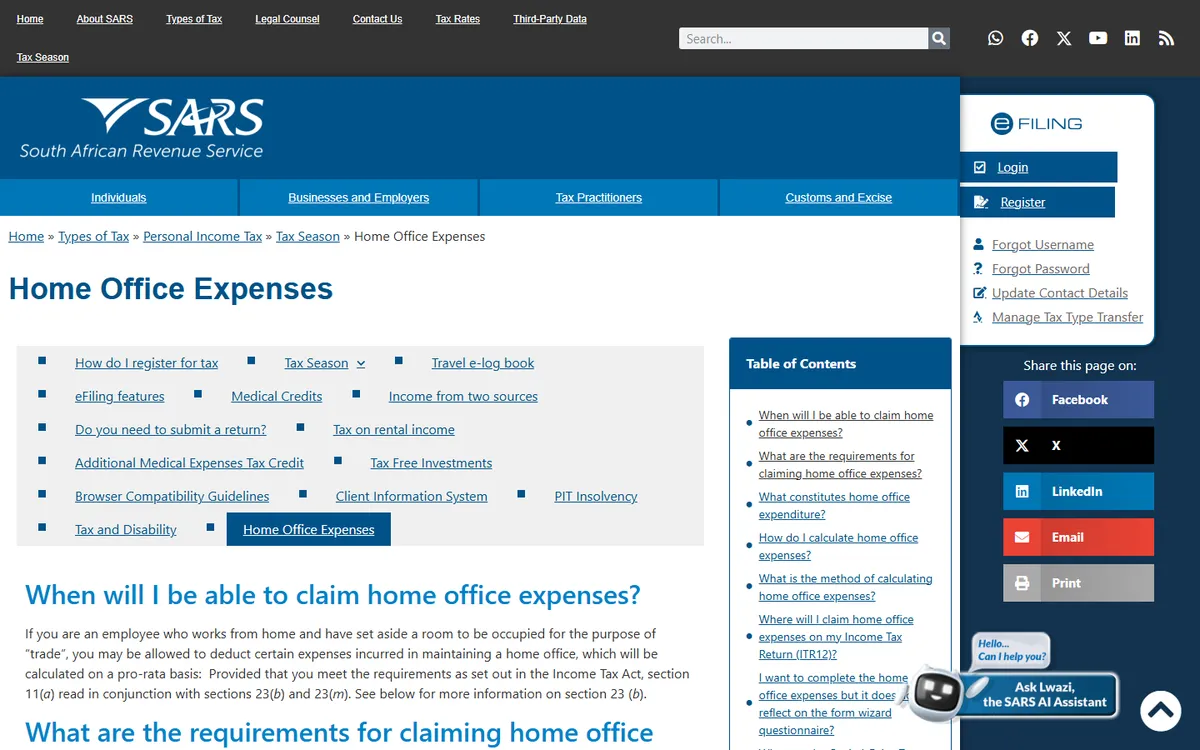
Short answer: salaried employees can only claim home office expenses if the space is specifically equipped for work, used regularly and exclusively for work, and you do more than 50% of your work there. If you qualify, you claim a share of costs like rent, rates and electricity, based on the office's floor area. Bond interest is no longer deductible for salaried employees, and claiming can affect capital gains tax when you sell your home (SARS home office page).
General information, not tax advice. SARS often checks home office claims. If you're unsure whether you qualify, speak to a registered tax practitioner before you claim.
The three tests (salaried employees)
According to SARS and its Interpretation Note 28 (issue 3, released March 2022, as summarised by Forvis Mazars):
- Specifically equipped. The space has what you need to do your job, such as a workstation, chair, computer and communication equipment.
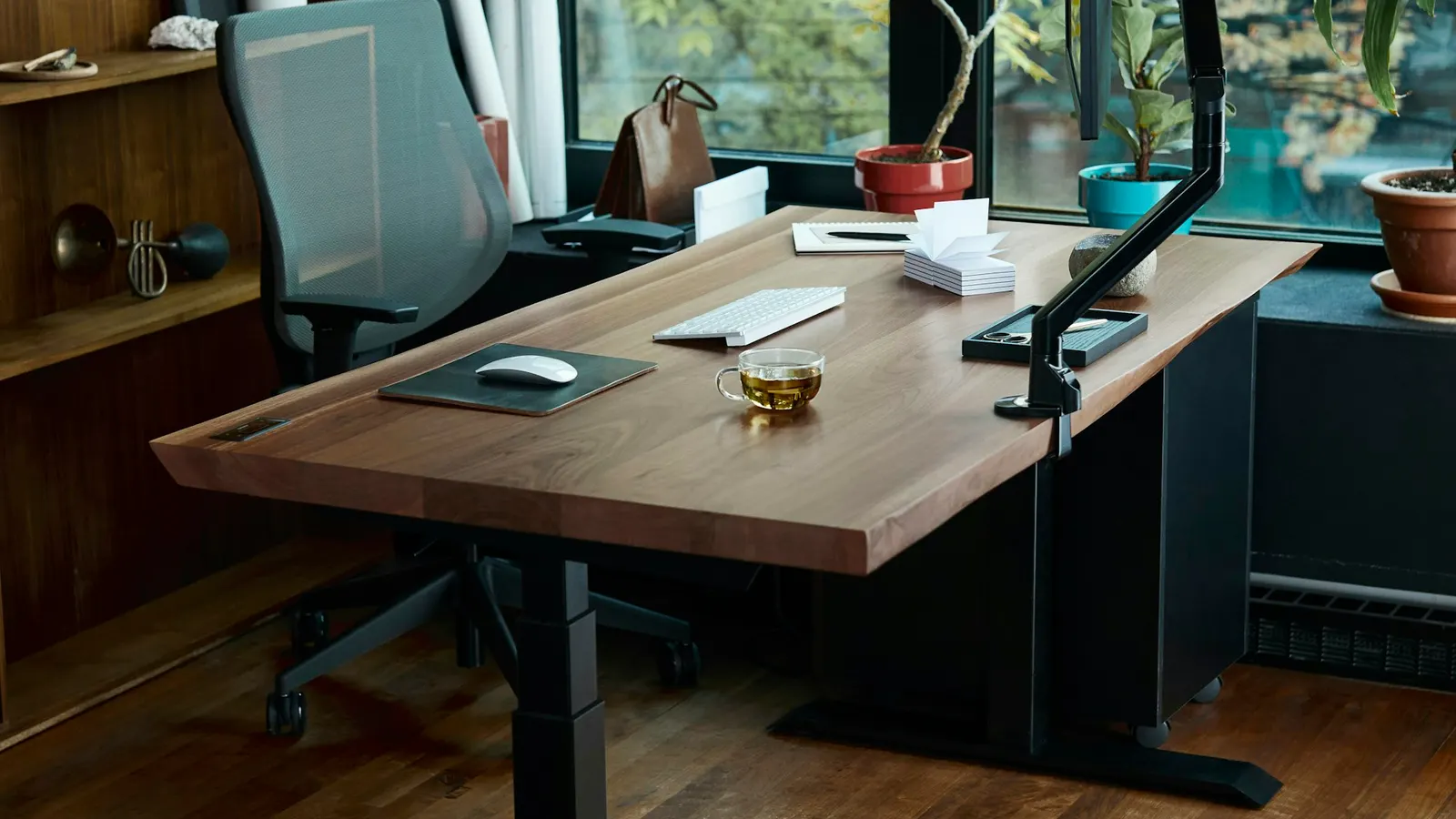
- Used regularly and exclusively for work. Occasional use doesn't count, and neither does a dining table, or an office that becomes a TV room at night. SARS says it will be hard to prove exclusive use if the space isn't a separate room.
- Mainly working from home. More than 50% of your duties must be performed in the home office during the year.
Commission earners: if more than 50% of your pay is commission or variable pay, the test is different. More than 50% of your duties must be performed somewhere other than an office your employer provides.
Sharing doesn't work. If you and your partner share one room and the same equipment as a home office, SARS says neither of you can claim. Separate, clearly divided spaces are treated differently.
What you can and can't claim
| You can claim (apportioned) | You can't claim (salaried employees) |
|---|---|
| Rent | Bond interest (no longer deductible, according to SARS) |
| Rates and taxes | Phone and data costs |
| Electricity | Fibre installation and subscriptions |
| Cleaning | Stationery and refreshments |
| Repairs to the premises | Levies on common property |
| Home owner's insurance on the premises | Solar systems and inverters built into the structure |
| Wear and tear on office furniture and equipment (not apportioned) | Expenses of a capital nature |
Sources: SARS and Forvis Mazars on IN28. Deloitte's guide lists similar items. Where sources differ on bond interest, we follow SARS's own page.
How to calculate the deduction
SARS's formula is:
Home office floor area ÷ total floor area of your home × premises-related costs
The total floor area includes outbuildings. Wear and tear on your desk, chair and computer is calculated separately and isn't apportioned by floor area.
Example (illustration). Your home is 150m² and your office is 12m², so you can claim 8% of premises costs. Over the year you pay R96,000 in rent, R14,400 for electricity and R6,000 for cleaning, a total of R116,400. Your premises deduction is 8% × R116,400 = R9,312. At a 31% marginal tax rate (taxable income of R383,101 to R530,200 in the SARS 2026/27 tax table), that saves you about R2,887 in tax. We calculated this using SARS's method.
You claim it on your annual tax return. Non-provisional taxpayers file by 23 October 2026 for the 2026 tax year (SARS filing season). Enter the amount under source code 4028 in the "Other deductions" section of your ITR12, according to SARS.
The capital gains catch
If you own your home and claim a home office, that part of the house is treated as used for trade. When you sell, part of the gain falls outside the primary residence exclusion and becomes taxable. The taxable part is based on the office's floor area and how long you used it (SARS). The exclusion is R3 million for 2026/27, up from R2 million, according to National Treasury's Budget 2026 tax guide. SARS's home office page still mentions the old R2 million. For a homeowner, a small yearly deduction can lead to a bigger tax bill later. Run the numbers before you claim.
Records to keep
Deloitte suggests keeping:
- A letter from your employer confirming you're allowed to work from home
- A record of the days you worked at home and at the office
- A floor plan with measurements, and photos of the equipped space
- Your apportionment calculation and proof of each expense (lease, municipal bills and so on)
Keep these for at least five years. SARS may ask for them in a verification. See why SARS delays refunds.
FAQ
Can I claim a home office if I work from home 3 days a week?
Probably. If 3 out of 5 working days are at home, that's more than 50%, as long as the space also passes the equipped and exclusive-use tests.
Can I claim my bond interest for a home office?
SARS says bond interest is no longer deductible for salaried employees. Other premises costs such as rates, electricity and repairs can still be apportioned.
Can I claim internet and phone costs?
Not as a salaried employee claiming a home office, according to SARS's interpretation note as summarised by Forvis Mazars.
Does a home office affect capital gains tax?
Yes, if you own your home. The office's share of any gain loses the primary residence exclusion and becomes taxable when you sell.
Where do I enter it on my tax return?
Under source code 4028 in the "Other deductions" section of the ITR12.
Sources
Pages we used for this article, checked on or before the update date above.
- SARS home office page · sars.gov.za
- Forvis Mazars · forvismazars.com
- Deloitte's guide · deloitte.com
- SARS 2026/27 tax table · sars.gov.za
- SARS filing season · sars.gov.za
- National Treasury's Budget 2026 tax guide · treasury.gov.za
Changelog: 16 Oct 2026, first published. Updated the same day with the R3 million primary residence exclusion from the Budget 2026 tax guide.